Shopify API integrations
External systems connected through Admin API, Storefront API, Webhooks, bulk operations, and reliable data-processing queues.
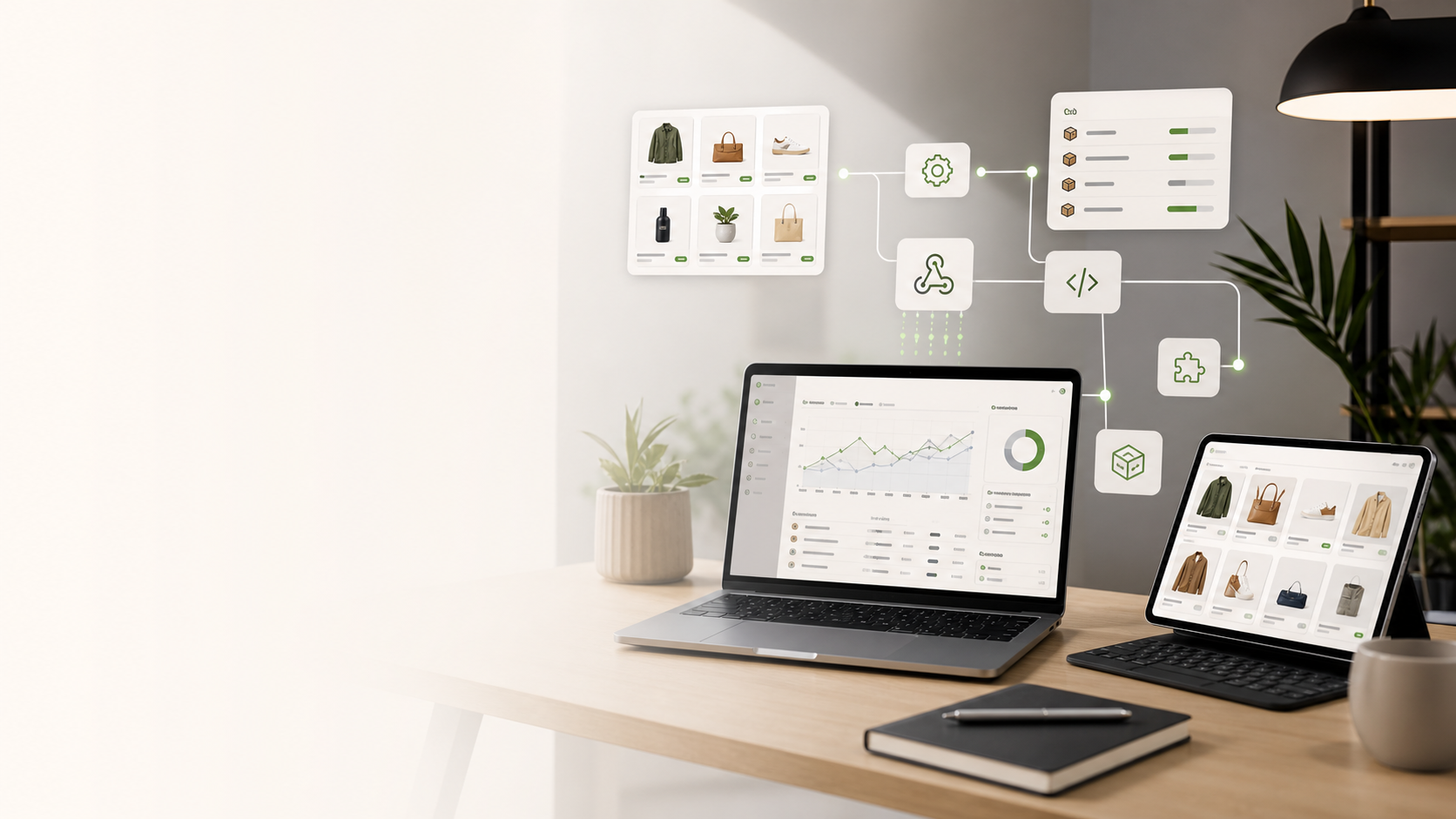
Shopify API / supplier integrations / custom apps
We connect suppliers, synchronize catalogs and inventory, automate order flows, build custom apps, and link Shopify with the operational logic your business already runs on.
What we solve
A good integration does more than “move data”. It removes manual work, protects the store from stock and pricing errors, speeds up supplier launches, and gives the team a clear way to control operations.
Services
External systems connected through Admin API, Storefront API, Webhooks, bulk operations, and reliable data-processing queues.
Product import, price and stock synchronization, images, collections, and publishing rules from CSV, XML, JSON, FTP, ERP, or PIM.
Private and public apps for admin workflows, storefront logic, checkout behavior, special discounts, and internal operations.
Order routing to suppliers, fulfillment statuses, tracking numbers, returns, notifications, and data reconciliation between systems.
Ready solutions
Our internal base already includes European dropshipping suppliers with more than 300,000 products. It can be used as a starting point for catalog import, supplier filtering, margin rules, and automated product publishing.
Shopify App
Our Shopify app helps merchants integrate and automate orders for cosmetics, personal care, and perfume products, with access to more than 30,000 items prepared for dropshipping workflows.

New Shopify app
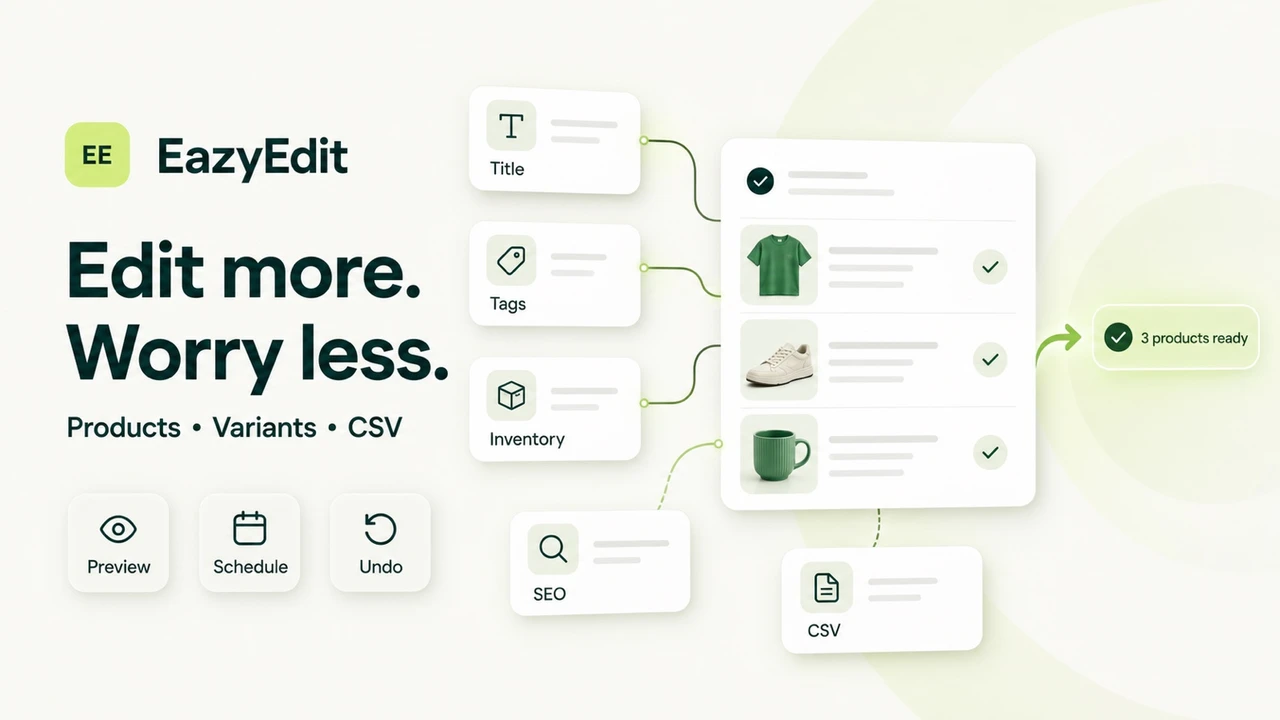
Update products and variants in bulk, import or export CSV files, schedule recurring catalog updates, and restore backed-up values when plans change. A free plan is available.
Start an online store
We help launch the whole flow: Shopify setup, product catalog, Dropship Supply app, supplier logic, order automation, and the first operational checks. You can start lean, test products fast, and build the store around real sales instead of manual work.
Process
We define sources, API limits, update frequency, risks, and control points.
We choose architecture, mapping rules, error handling, logging, and monitoring.
We ship an MVP, test real scenarios, and verify Shopify limits and data quality.
We set up observability, documentation, update routines, and a roadmap for growth.
Formats
A fast review of the current setup, bottlenecks, rate-limit risks, duplicates, and manual operations.
Design, development, testing, and launch for Shopify connections with suppliers, ERP, CRM, or warehouse systems.
An admin or storefront app MVP with a clear scope, a fast release, and a practical plan for further development.
Blog
Before writing API code, it is worth defining how products, variants, inventory, prices, suppliers, and publishing rules should behave inside Shopify. A clean data model prevents duplicate products, broken variants, and manual fixes after every supplier feed update.
Large catalogs need filtering, batching, category mapping, and strict publishing rules. The goal is not to push every item at once, but to control what enters the storefront, how margins are calculated, and how Shopify bulk operations are scheduled.
Real ecommerce automation has to survive API limits, delayed supplier responses, and temporary failures. Webhooks should trigger controlled jobs, queues should absorb traffic spikes, and retries should be visible through logs and alerts.
Marketplace apps are useful until the workflow becomes specific: custom pricing, supplier approval, internal dashboards, checkout rules, or admin actions. A focused custom app can remove plugin conflicts and fit the exact business process.
Project start
A rough description is enough: which systems you use, what needs to be synchronized, where the current pain is, and what result should come out of the project.